
Wildlife removal cost in the Hudson Valley has no flat price. The total depends on four things: the animal, where it is living in your home, how it got in and what needs to be repaired once it is gone. Two homes with the same animal can end up with very different quotes.
This guide explains each factor that changes the price, so you can read a wildlife removal quote with confidence and compare quotes on what they actually include.
Why Wildlife Removal Has No Flat Price
Wildlife removal has no flat price because the size of the job is only clear once someone has looked at the house. A phone estimate is based on what you can see and hear. An inspection often finds more.
Four findings commonly change an animal removal cost after the inspection:
- Hidden entry points. The hole you found is often not the only one. Squirrels, bats and mice use gaps along the roofline, vents and soffits that are hard to see from the ground.
- More animals than expected. One squirrel in the attic can turn out to be several.
- Young inside. A nest of babies changes the method and the timing, because the young cannot leave on their own.
- Damage already done. Chewed wood, torn vents and soiled insulation add repair or cleanup work.
None of this means the first estimate was wrong. A phone estimate covers the problem as described, and the inspection shows the full problem.
What Changes the Cost of Wildlife Removal
Five factors shape the cost of wildlife removal: the type of animal, where it is living, how many entry points need sealing, how many visits the job takes and what cleanup or repairs follow.
The Type of Animal
Each animal needs its own method, equipment and handling. A single snake in a garage is a different job from a raccoon family in an attic. Some animals also call for extra care: the New York State Department of Health lists raccoons, skunks and bats among the wild animals in which rabies is most commonly seen. These rabies-vector species are handled with more caution, which can add time to the job.
Where the Animal Is Living
Access changes the work. An animal in an open crawl space is easier to reach than one inside a wall, high in a chimney or deep under a concrete porch. Steep roofs, tall rooflines and tight attics can mean ladders, safety gear and more labor hours. Animals under decks and sheds often need digging or barrier work around the base.
How Many Entry Points Need Sealing
Sealing entry points, called wildlife exclusion, is often the largest part of the job. Every gap an animal can use has to be closed, or the same animal or a new one moves back in. A house with one chewed vent costs less to seal than a house with gaps along the soffits, roof vents, chimney flashing and foundation. Our team handles rodent proofing and exclusion for squirrels and other wildlife.
Trapping Time and Number of Visits
Removal can take more than one visit. Traps or one-way doors may need to stay in place for several days, with follow-up visits to check them and remove the animal. More visits mean more labor. When you compare quotes, ask how many visits each one includes.
Cleanup and Repairs After Removal
What the animal leaves behind can add to the total. Droppings, nesting material, soiled or flattened insulation, chewed wood and damaged wiring may all need attention after removal. These are separate tasks from removing the animal, so a quote may list them as add-ons or leave them out. Ask which parts of the cleanup a quote covers.
Cost Factors by Animal
Each animal has its own habits, and those habits decide what makes a job simpler or harder. Here is what typically moves the price for the animals we handle across the Hudson Valley.
Squirrel Removal
Squirrel removal cost depends mostly on how many entry points the squirrels have chewed or found along the roofline, soffits and vents. Squirrels are usually removed with one-way exclusion, which lets them leave but not return, followed by sealing every opening. Chimney cases add work at the top of the flue; our guide to a squirrel or raccoon in your chimney explains those jobs. Learn more about our squirrel removal service.
Raccoon Removal
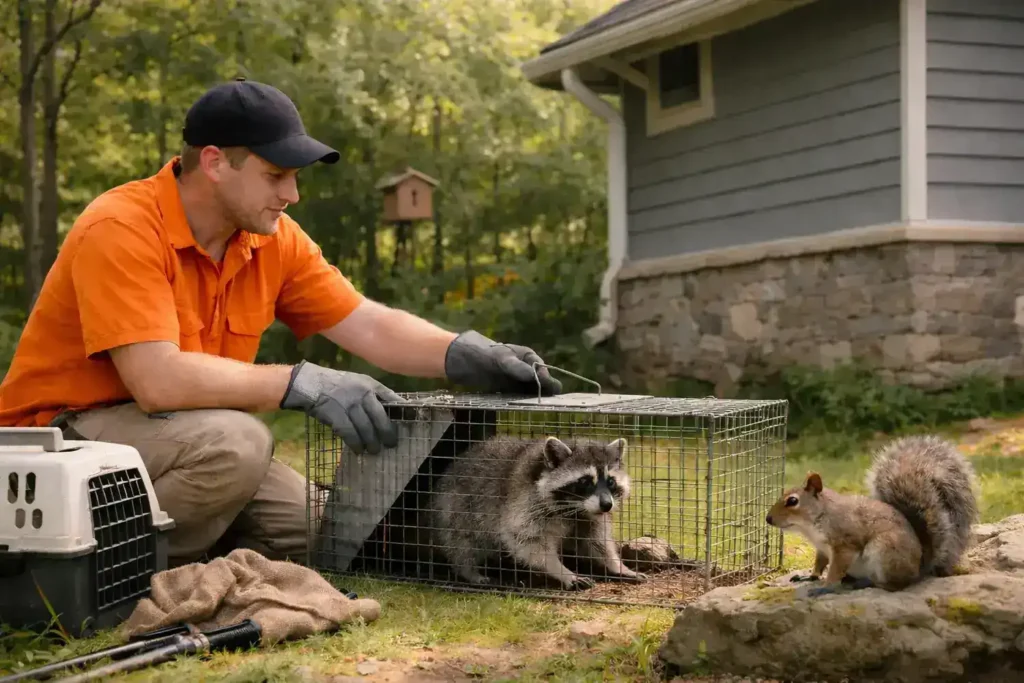
Raccoon removal cost rises with the size and strength of the animal and the damage it causes. Raccoons can tear open vents, shingles and soffits to get in. A mother with young in the attic changes the plan, because the whole family needs to come out. Attic use often leaves droppings and flattened insulation behind, which adds cleanup and repair. See our raccoon removal service.
Bat Removal
Bat removal cost depends on the size of the colony and the number of gaps bats use, which can be very small. Timing also matters. Cornell Cooperative Extension advises against bat exclusion from late May through mid-August, when young bats cannot fly yet. Read more about our bat removal service and our guide to bats in the attic.
Groundhog and Skunk Removal
Groundhog removal cost and skunk removal cost both depend on where the burrow is. Burrows under porches, decks and sheds are harder to reach than burrows in an open yard. Once the animal is out, the opening is often closed with a buried barrier or fencing so another animal does not move in, and the length of that barrier affects the total. See our groundhog removal and skunk removal services.
Snake Removal
Snake removal is often a single-visit job when the snake is in a garage, basement or living space. Venomous snakes need extra care and equipment. Finding and sealing the gap the snake used adds work. Learn more about our snake removal service.
What Affects the Cost of Removing an Animal From the Attic
The animal in attic removal cost depends on five things: attic access, the size of the nest, the level of contamination, the number of entry points and the condition of the insulation.
- Attic access. A walk-up attic is quicker to work in than a tight crawl space reached through a ceiling hatch.
- Nest size. A single squirrel nest takes less time to clear than a raccoon den or a large bat colony.
- Contamination. Droppings and urine spread over a wide area add cleanup time.
- Entry points. Attics often have several openings along the roofline, and each one needs sealing.
- Insulation condition. Soiled, compressed or torn insulation may need removal and replacement.
The same factors apply to a rodent in attic removal cost, where the number of small gaps often matters more than the number of mice or rats.
Why an Inspection Comes Before the Price
An accurate wildlife removal quote needs an on-site inspection, because most of the factors above can only be seen up close. A wildlife inspection checks five things:
- Which animal is present, and whether there are young
- Where the animal is living inside or under the home
- Every entry point along the roof, siding, vents and foundation
- Damage to wood, vents, wiring and insulation
- What exclusion and repairs will keep animals out afterward
Inspection policies differ from company to company. Ask whether there is an inspection fee and, if so, whether it is credited toward the job.
Questions to Ask Before You Approve a Quote
A written quote is easier to compare when you know exactly what it covers. Ask these six questions before you approve one:
- What is included in the price, and what is extra?
- How many visits does the quote include?
- Is exclusion (sealing entry points) part of the quote or a separate line?
- Is there a warranty, and what exactly does it cover?
- Is cleanup of droppings or insulation included or priced separately?
- What happens, and what does it cost, if the animal comes back?
Clear answers to these questions make two quotes comparable, even when the totals differ.
Wildlife Removal Cost FAQs
How Much Does It Cost to Get Rid of Raccoons?
The cost to get rid of raccoons depends on where they are in the home, whether there are young, how many entry points need sealing and how much cleanup the attic needs. An inspection gives you a firm number.
How Much Is Squirrel Removal?
Squirrel removal is priced mainly by the number of entry points and the amount of exclusion work needed to seal them. Removing the squirrels is usually a smaller part of the total than closing the gaps they used.
How Much Does Animal Control Cost?
Municipal animal control services vary by town, and many focus on dogs and other domestic animals rather than wildlife in homes, so check with yours. For a wild animal on your property, the New York State Department of Environmental Conservation directs homeowners to a licensed Nuisance Wildlife Control Operator, a private company that charges for its work.
How Much Does It Cost to Remove a Skunk?
The cost to remove a skunk depends on where it lives, such as under a deck, porch or shed, and on the barrier work needed to keep it out. The risk of spray also calls for careful handling, which can add time.
Get a Wildlife Removal Quote in the Hudson Valley
The clearest way to understand your wildlife removal cost is an inspection, followed by a clear written quote. Our licensed and insured wildlife specialists serve homeowners across Columbia, Dutchess, Greene and Ulster counties with humane, chemical-free removal and wildlife exclusion. We hold NYS DEC licenses #2912 and #2913 and NYS License #16000101766.
Check our current offers, including $100 off a wildlife exclusion project and 10% off for first responders and veterans with enrollment in a recurring service plan, or request an inspection today.