
Scratching above the fireplace, chirping behind the damper or a sour smell in the living room often means an animal has gotten into your chimney. Most animal in chimney problems involve one of four animals: squirrels, raccoons, birds or mice. Each one gets in a different way and needs a different response.
Start with one rule: keep the fireplace off and the damper closed while an animal may be inside. A fire does not drive wildlife out. Smoke can trap young animals in the flue and push a frightened adult down toward your home.
This guide covers the signs to look for, how to tell which animal you are dealing with, what to do right now, how professionals remove it and how to keep animals out afterward.
Signs There Is an Animal in Your Chimney
The clearest signs of an animal in your chimney are sounds, smells and debris that appear around the fireplace. Watch for these six clues:
- Scratching or scrambling inside the flue or above the damper
- Chirping, chattering or crying, which can come from birds or from young animals in a nest
- The timing of the noise: daytime activity points to squirrels and birds, while night activity points to raccoons
- A musky or rotten smell near the fireplace
- Nesting material, twigs, leaves or droppings in the firebox
- An animal seen on the roof, on the chimney crown or going in and out of the chimney top
These signs are clues, not proof. A flue can carry sound from the attic or the walls, so a professional inspection confirms what is inside and where.
Which Animal Is in Your Chimney?
The type of animal decides what happens next, because squirrels, raccoons, birds and mice each need a different removal method. The four sections below cover how each animal gets in and what it sounds like. Bats can also end up in chimneys; our guide to bats in the attic explains the signs and safe removal steps.
Squirrels in the Chimney
A squirrel in the chimney usually gets in through an open flue with no cap or a damaged chimney screen. Squirrels are active during the day, so scratching that starts in the morning and stops at dusk is a common sign. A squirrel that falls into the flue often cannot climb back up the smooth liner. It ends up trapped on the smoke shelf or sitting on the closed damper.
Do not open the damper to let a squirrel out, and do not set a trap inside the flue. A frightened squirrel that drops into the firebox can get into the house. Our team handles squirrel removal from chimneys, roofs and attics. If you also hear noise above the ceiling, read our guide to squirrels in the attic.
Raccoons in the Chimney or Fireplace
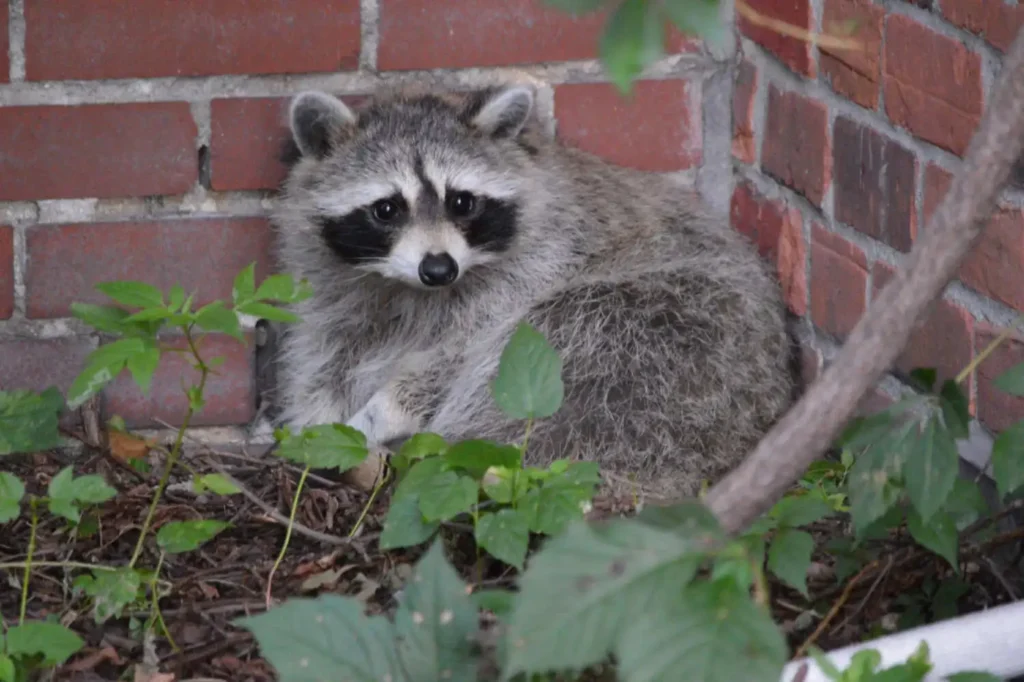
A raccoon in the chimney climbs down from the roof and settles on the smoke shelf, the flat ledge just above the damper. Raccoons are strong climbers and mostly active at night, so you may hear heavy movement, growling or chattering after dark. A mother raccoon may use a chimney as a den to raise her young, which makes removal a careful, step-by-step job.
Raccoons are one of the wild animals most often linked to rabies in New York. The New York State Department of Health lists raccoons, skunks and bats among the animals in which rabies is most commonly seen, and advises against handling wild animals. These animals are often called rabies-vector species. Never approach or try to handle a raccoon in the fireplace. Our team provides raccoon removal, and our post on raccoon removal and cleanup covers what happens after the animal is out.
Birds Stuck in the Chimney
A bird stuck in the chimney is either a single bird that fell in or a nesting colony on the flue wall. A single trapped bird flutters and scratches for a short time. A nest produces steady, high-pitched chirping that grows louder when the parents return with food.
Many chirping nests belong to chimney swifts, small gray birds that glue a half-saucer nest of twigs and saliva to the inside of the flue. According to the U.S. Fish and Wildlife Service, chimney swifts are protected under the Migratory Bird Treaty Act, so harassing or harming the birds, their eggs or their nests is illegal. An active swift nest cannot simply be pulled out.
For a single bird, keep the fireplace glass doors closed and the room quiet. Do not open the damper into an open room, because a panicked bird can fly into the house. Our team offers bird removal and can tell you whether the birds in your chimney can be removed or need to be left until the nesting season ends.
Mice in the Chimney
Mice in the chimney usually use the chimney as a way into the house rather than a place to live. Gaps around the flashing, cracked mortar and openings where the chimney meets the roof let mice slip into the walls and the attic. Light scratching inside the walls near the chimney is a common sign. Our mice control service handles mice that get in this way.
What to Do When an Animal Is Stuck in Your Chimney
When an animal is stuck in your chimney, your job is to keep it contained in the flue and keep people and pets away until help arrives. Take these five steps:
- Keep the damper closed so the animal stays in the flue.
- Keep the fireplace off, including gas logs.
- Close the glass doors or fireplace screen, then close the door to the room.
- Keep pets and children out of the room.
- Note what you hear and when, such as scratching in the morning or chirping at feeding times. This helps identify the animal.
Avoid these four mistakes, which put you, your home and the animal at risk:
- Do not light a fire or use smoke to drive the animal out. Young animals cannot escape, and adults may flee down into the house instead of up.
- Do not reach into the flue or open the damper to look.
- Do not use poison. An animal that dies inside the chimney leaves a smell that is hard to remove.
- Do not try to trap the animal yourself. The New York State Department of Environmental Conservation states that it is illegal for you to move or relocate a wild animal off your property.
How Professionals Remove an Animal From a Chimney
Professional animal in chimney removal starts with an inspection and ends with the entry point closed, so the same opening cannot be used again. Our licensed and insured wildlife specialists follow five stages:
- Inspection. We check the chimney top, crown, flashing, flue and firebox, along with the roof and attic around the chimney.
- Identification. We confirm which animal is inside and whether there are young in a nest.
- Humane removal. We use humane, chemical-free methods, with no poisons and no harmful traps. Humane removal often relies on one-way exclusion, a device that lets the animal leave the chimney but not get back in.
- A check for young. Young animals cannot survive alone in the flue, so we make sure the whole family is out.
- Exclusion. We seal the entry points the animal used so other wildlife cannot follow.
The price depends on the animal, the chimney and the repairs needed. Our post on what wildlife removal costs explains each factor.
What Happens If an Animal Dies in the Chimney
A dead animal in the chimney produces a strong odor that spreads through the fireplace into the room, and it often attracts flies. The smell does not go away on its own while the remains are still in the flue. Leaving them also means nesting material and droppings stay behind on the smoke shelf.
The remains need to be removed and the area cleaned before the fireplace is used again. Reaching into the flue yourself is unsafe, and the remains may be out of reach above the damper. Schedule a professional inspection to find where the animal is, how it got in and what needs to be sealed.
How to Keep Animals Out of Your Chimney
The most effective way to keep animals out of your chimney is to close every opening they can use, starting with the top of the flue. Four steps cover most homes:
- Install a chimney cap or screen. A cap is a metal cover with mesh sides that sits over the flue opening. It keeps squirrels, raccoons and birds out while letting smoke escape.
- Seal gaps around the flashing and crown. The flashing is the metal seal where the chimney meets the roof. Gaps there let mice and squirrels into the walls and attic.
- Trim branches near the roof. Overhanging limbs give squirrels and raccoons an easy path to the chimney top.
- Check the chimney once a year. A yearly look at the cap, crown and flashing catches damage before an animal finds it.
If an animal has already been inside, our wildlife exclusion service seals the entry points it used.
Animal in Chimney FAQs
Can Animals Come Down the Chimney Into the House?
Yes, animals can come down the chimney into the house through the firebox when the damper is open, damaged or missing. Keep the damper and the fireplace glass doors closed, close off the room and call a wildlife professional to remove the animal from the flue.
Who Should You Call When an Animal Is Stuck in Your Chimney?
Call a licensed wildlife control company when an animal is stuck in your chimney, not a chimney sweep alone. In New York, anyone who charges a fee to remove nuisance wildlife needs a Nuisance Wildlife Control Operator license from the Department of Environmental Conservation. CrittereX holds NYS DEC licenses #2912 and #2913 and NYS License #16000101766.
Will a Dead Bird in the Chimney Smell?
Yes, a dead bird in the chimney smells, and the odor lasts as long as the remains stay in the flue. Flies often follow. Removing the bird and cleaning the area stops the smell. Do not reach into the flue yourself.
Get Help With an Animal in Your Chimney in the Hudson Valley
If you hear or smell an animal in your chimney, keep the fireplace off and the damper closed, then call us. Our licensed wildlife specialists serve homeowners across Columbia, Dutchess, Greene and Ulster counties with humane, chemical-free removal and wildlife exclusion. Ask about our current offer of $100 off a wildlife exclusion project with enrollment in a recurring pest or wildlife service plan.
Read more about our squirrel removal, raccoon removal and bird removal services, or contact our team to schedule a chimney inspection.