



Bats in the attic are a common problem for Hudson Valley homes, and they rarely leave on their own. A bat colony returns to the same roost year after year, so guano and odor build up over time. This post explains the signs of bats in the attic, the health risks, what changes in winter, and how CrittereX removes bats humanely and keeps them out.
Why Bats Roost in Attics
Bats roost in attics because an attic is warm, dark, dry and protected from predators. Those conditions match what a colony needs to rest during the day and, in summer, to raise its young. Female bats form maternity colonies in late spring, and the heat of an attic helps their pups grow.
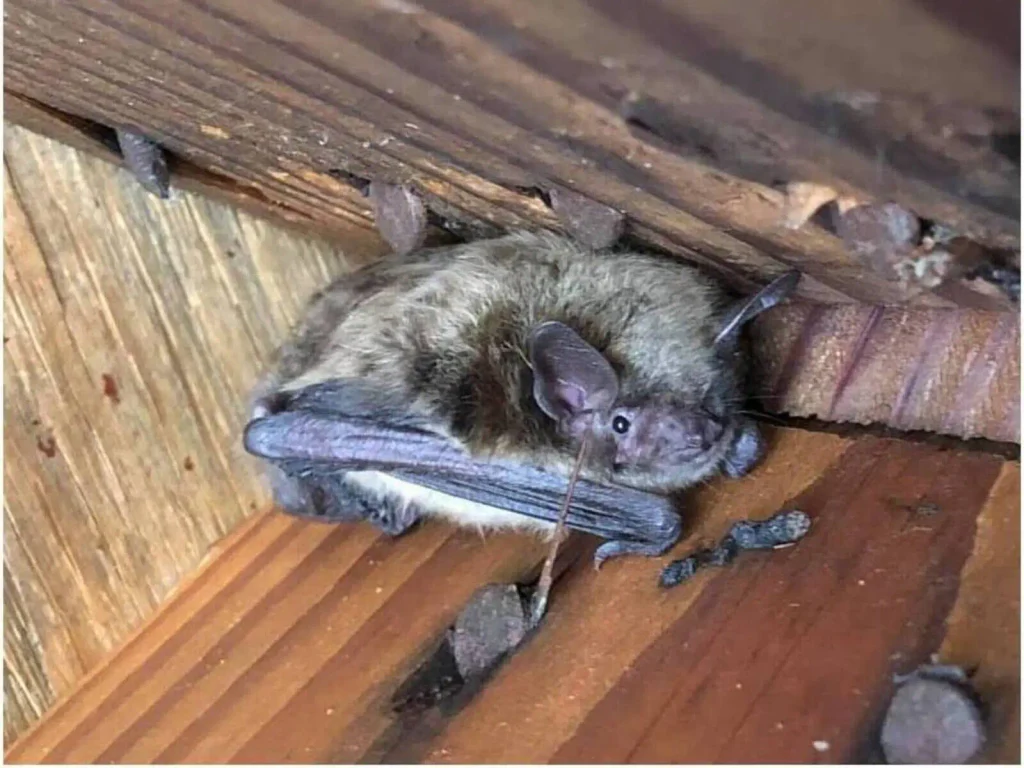
Bats enter through small openings. Common entry points include:
- Gaps along the roofline and ridge vent
- Loose or damaged soffits and fascia boards
- Gable vents without screens
- Gaps around chimneys and flashing
- Openings where siding meets the roof
Bats are protected in New York State, and harming or killing them is illegal. Removal means exclusion: letting the bats leave on their own and sealing the house so they cannot return. CrittereX is licensed by the New York State DEC and uses humane, chemical-free methods.
Signs of Bats in the Attic
To tell if you have bats in your attic, look for 3 signs: noises at dusk, guano near entry points and bats leaving the roofline. Bats are active at night and hide during the day, so most homeowners notice the evidence before they see a bat.
Noises at Dusk and Night
Bats make scratching, rustling and high-pitched squeaking sounds in the attic, walls or ceiling. The noise is loudest around sunset, when the colony wakes and leaves to feed, and again before sunrise, when the bats return. Squirrels are active during the day, so noise that peaks at dusk and dawn points to bats.
Guano, Stains and Odor
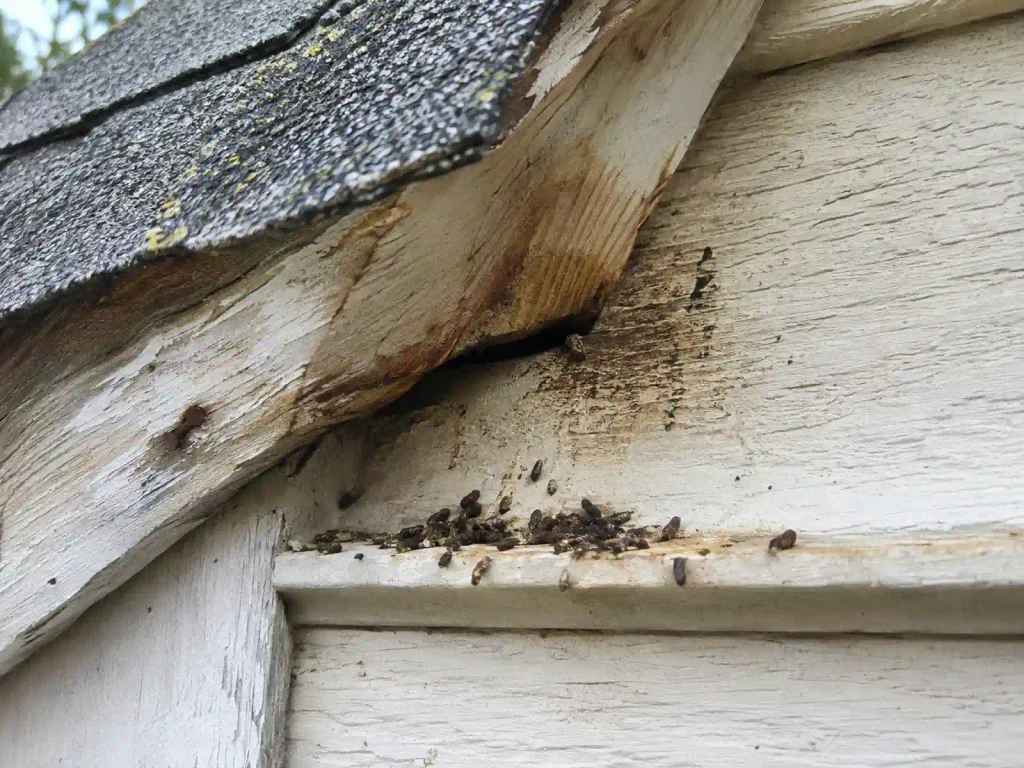
Bat guano (droppings) collects below the roost and under entry points outside the house. Guano looks like mouse droppings but crumbles into a fine powder when crushed, because it is made of insect parts. Other signs in this group include:
- Dark, greasy rub marks around gaps where bats squeeze in and out
- Brown stains on siding, windows or the deck below entry points
- A sharp, ammonia-like smell from built-up urine and guano
Bats Leaving the Roofline at Dusk
Watching the house just after sunset is one of the easiest ways to confirm a colony. Bats leave one by one from the same gaps every evening. Note where they exit, because those spots tell an inspector where the colony enters.
Are Bats in the Attic Dangerous?
An attic bat colony carries two main health risks: rabies and histoplasmosis. Most bats are healthy, but a sick bat that ends up in the living space can expose people and pets to rabies. The New York State Department of Health advises that a bat found in a room with a sleeping person or next to an unattended child counts as a possible exposure, because a bite can go unnoticed.
Guano is the second risk. The CDC explains that Histoplasma, the fungus behind histoplasmosis, grows especially well in material with large amounts of bird or bat droppings, and people get sick after breathing in its spores. Sweeping or vacuuming dry guano disturbs the droppings and puts those spores into the air. Leave large guano deposits to a professional with protective equipment.
Bats in the Attic in Winter
Some bats stay in Hudson Valley attics through the winter. Most bats leave buildings in fall for caves and mines, but big brown bats often hibernate inside houses, in attics and wall voids.
Do Bats Hibernate in Attics?
Yes, big brown bats hibernate in attics, walls and other quiet parts of a house. A hibernating bat lowers its body temperature and heart rate to save energy through the cold months. Sudden temperature swings, such as a warm spell or a heating system turning on near the roost, wake bats up. A waking bat moves to find a better spot and sometimes ends up inside the living space.
What to Do If a Bat Gets Into Your Living Space
The state health department gives clear steps for a bat inside the house:
- Close the windows, the room’s entry door and the closet doors so the bat stays in one room.
- Turn on the lights and wait for the bat to land.
- Wear gloves and cover the bat with a container, such as a box or pail.
- Slide cardboard under the container, tape it shut, and call your local health department.
Do not release the bat if it may have touched a person or a pet, or if it was found in a room with someone asleep. The health department decides whether the bat needs rabies testing. A bat can be let out through an open window only when there was no chance of contact, for example when you watched it fly in and never lost sight of it.
Why Bats Are Not Excluded in Winter
Bats are not excluded in winter because a hibernating bat that is shut out of its roost cannot survive the cold or find food. One-way exclusion only works when bats leave the house on their own to feed, which happens in warm weather. Winter is the right time for an inspection: a technician finds the entry points, confirms the colony and plans the exclusion for spring.
How to Get Rid of Bats in the Attic Safely
The safe way to get rid of bats in the attic is professional exclusion in 4 steps: find the entry points, install one-way exclusion devices, clean up the guano, and seal the house. Poisons, traps and repellents do not solve a bat problem, and harming bats is illegal in New York.
Finding How Bats Get Into the House
A CrittereX technician inspects the roofline, soffits, vents, chimney and siding to find the gaps the bats use. The attic inspection shows the size of the colony, where guano has built up and whether insulation is damaged. A full inspection matters because bats move to a second gap when only one is sealed.
One-Way Exclusion Devices
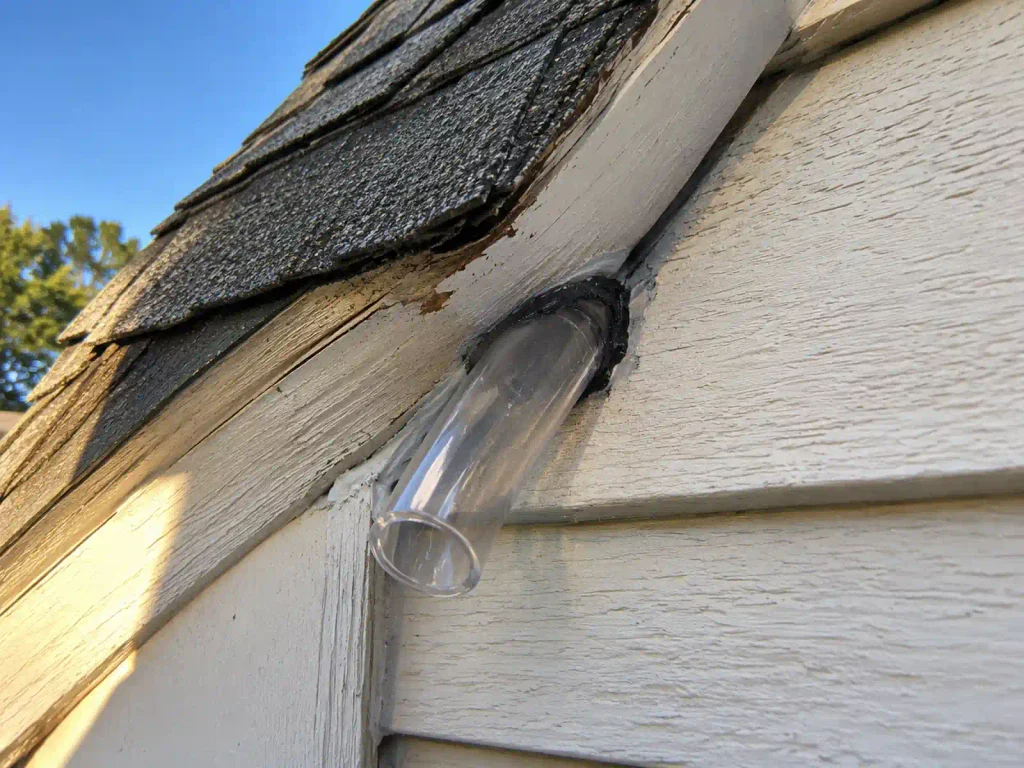
One-way exclusion devices are tubes, cones or netting placed over the main entry points. Bats leave through the device at dusk to feed, but the device stops them from flying back in. Exclusion usually takes 3 to 7 days, depending on the size of the colony and the season.
Guano Cleanup
Guano cleanup removes droppings, treats contaminated areas and reduces odor in the attic. Small amounts of guano are removed with protective gear. Heavy buildup that has soaked into insulation means the insulation needs a closer look during the inspection.
Sealing Entry Points
Every secondary gap is sealed so the bats can leave only through the one-way devices. Once the colony is out, the devices come down and those last openings are sealed too. Sealing the whole house, not only the main exit, is what keeps the colony from returning next season.
When Bats Can Be Removed in New York
Bats can be excluded in spring before pups are born and in late summer or fall after the young can fly. From late spring through summer, maternity colonies raise flightless pups. Excluding bats during that period traps the pups inside, where they die and create odor and health problems, and it pushes the mothers to search for other ways in, sometimes through the living space.
CrittereX does not install exclusion devices from May through August. During those months, the team focuses on prevention and times the exclusion for after the pups can fly.
Why Hudson Valley Homeowners Call CrittereX
CrittereX provides humane bat removal across Columbia, Dutchess, Greene and Ulster counties, including Saugerties, Kingston and Woodstock. Homeowners call CrittereX for 4 reasons:
- Licensed by New York State (NYS License #16000101766 and DEC licenses #2912 and #2913)
- Humane, chemical-free exclusion that lets bats leave unharmed
- Full sealing of entry points, not only the main exit
- Clear explanations of the plan and timing before work starts
Learn more about our bat removal services in the Hudson Valley.
Bats in the Attic FAQs
How Long Does Bat Removal Take?
Bat exclusion usually takes 3 to 7 days, followed by sealing and cleanup. The timeline depends on the size of the colony, the number of entry points and the season, since exclusion only happens when the bats are active and leaving the roost to feed.
Can Bats Get Into the House From the Attic?
Yes, bats can get into the house from the attic through gaps around light fixtures, attic doors, chimneys, pipes and ductwork. A bat in the living space often means a colony in the attic or walls. Sealing these inside gaps is part of a complete bat exclusion.
What If a Bat Disappears Inside the House?
Call your local health department if a bat disappears inside the house and anyone may have had contact with it. The state health department advises calling for advice whenever a bat cannot be captured, so the department can tell you what to do next. A bat that hides in the walls or ceiling often means there is a gap that leads back to the attic, so an inspection is the next step.
When Do Bats Leave the Attic?
Bats leave the attic every evening around dusk to feed on insects and return before sunrise. A colony does not leave the house for good on its own: maternity colonies use the same roost each summer, and big brown bats often stay through the winter. Exclusion is the only way to make the bats leave permanently.
What Should You Do If You Find Bats in the Attic?
Leave the bats alone and do not seal any gaps yet, because sealing an entry point can trap bats inside the house. Note where bats exit at dusk, keep pets and children out of the attic, and call a licensed wildlife professional to inspect the home and plan a humane exclusion at the right time of year.
Protect Your Home From Bats: Contact CrittereX
Attic bats do not go away on their own, and the same colony returns to the roost every season. Call CrittereX at (845) 247-7564 or contact our team to schedule a bat inspection. We confirm the colony, find the entry points and plan a humane exclusion at the right time of year.