



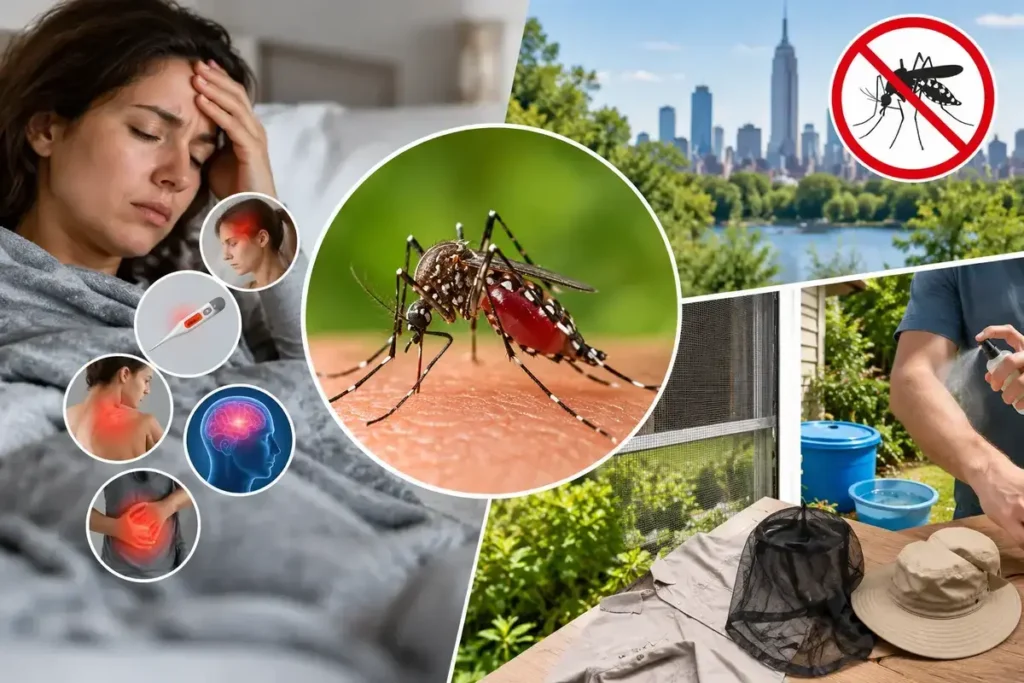
West Nile virus reaches people through mosquito bites, and the mosquitoes that carry it breed in the standing water found around many homes from summer into fall. Most infections cause no symptoms, but a small number become serious. Those mosquitoes bite most from dusk to dawn, prime time for summer evenings outside. Below are the West Nile virus symptoms to watch for, the signs that need a doctor right away, and the steps that cut mosquito numbers around your home.
What Is West Nile Virus?
West Nile virus is a mosquito-borne virus that infects people, birds, horses, and other animals. Mosquitoes, mainly Culex species, pick up the virus by feeding on infected birds and then pass it to people when they bite. The CDC identifies West Nile virus as the leading cause of mosquito-borne disease in the contiguous United States, and every state in the contiguous U.S. has reported cases. West Nile cases typically peak from late August to early September.
What Are the Symptoms of West Nile Virus?
About 8 in 10 people infected with West Nile virus never develop symptoms. About 1 in 5 develop a mild, flu-like illness with fever, headache, body aches, joint pain, vomiting, diarrhea, or rash. These symptoms usually start 2 to 6 days after the bite, though they can appear up to 14 days later. Fewer than 1 in 100 infected people develop severe neuroinvasive illness, which affects the brain and spinal cord. An itchy red bump at the bite site is a normal mosquito bite reaction, not a sign of West Nile virus.
Severe Symptoms That Need Immediate Medical Attention
Get medical care right away for high fever, neck stiffness, confusion, muscle weakness, tremors, or convulsions. The CDC lists these as signs of severe West Nile illness, which can inflame the brain or the membranes around the brain and spinal cord and may require hospitalization.
Is West Nile Virus Dangerous or Contagious?
West Nile virus is not contagious through everyday contact. People catch it from mosquito bites, and only rarely through blood transfusions, organ transplants, or from mother to baby. Severe illness is rare, but risk rises with age, chronic conditions such as diabetes, and a weakened immune system. No licensed vaccine or medicine prevents or treats it in people, so avoiding bites is what counts.
Mosquito Season and West Nile Risk in the Hudson Valley
People catch West Nile virus during mosquito season, which runs from summer through fall, typically June through October. Mosquitoes breed in standing water, so rain that collects in gutters, buckets, old tires, and low spots in the lawn sets off new generations. Mosquito eggs in that water hatch into larvae within a few days.
Eastern equine encephalitis (EEE) is a second mosquito-borne illness found in New York State. EEE is extremely rare but serious, and it spreads the same way. CrittereX’s seasonal mosquito control, covered below, targets the breeding sites on your property.
How to Reduce Your Mosquito Risk at Home
To get rid of mosquitoes in your yard, remove the standing water they breed in and make it harder for them to reach you:
- Empty buckets, plant trays, wading pools, and tarps after rain, and change birdbath water twice a week.
- Clean clogged gutters so roof water drains.
- Repair window and door screens so they fit tightly.
- Use an EPA-registered insect repellent outdoors, and wear long sleeves and long pants.
- Limit time outside from dusk to dawn, the peak hours for the mosquitoes that spread West Nile virus.
Most mosquito bites cause itching and swelling. Some people have a stronger allergic reaction to the bite itself, which is a separate problem from West Nile virus. These habits cut breeding on your property, but they miss hidden water and the tall grass and dense shrubs where adult mosquitoes rest during the day.
Professional Mosquito Control: The Most Reliable Way to Reduce Risk
Professional mosquito control reduces the number of mosquitoes on your property by treating breeding sites and the high-activity areas where mosquitoes gather, which home prevention alone does not reach. The CDC notes that household-level mosquito control can help decrease the number of mosquitoes that could spread West Nile virus. CrittereX follows the same 4-step process on every mosquito control service:
- Inspect & Identify. A licensed technician walks the property to find standing water in clogged gutters, birdbaths, and yard containers.
- Build a Targeted Plan. The plan fits your yard’s breeding sources, vegetation, drainage, and shade.
- Treat with Purpose. Targeted spraying goes to breeding sites and high-activity areas such as patios, decks, and entrances.
- Prevent & Follow Up. Standing-water guidance and seasonal mosquito control programs limit mosquito activity through the season.
Treatments use eco-friendly methods that are safe for families and pets. CrittereX’s technicians are licensed and insured, and the company brings 9 years of pest control experience in the Hudson Valley. Same-day service is offered, subject to availability. Treatment lowers mosquito activity on your property, and it pairs with repellent, long sleeves, and the other bite-prevention habits above for the strongest protection.
Learn more about mosquito control in the Hudson Valley, then use the Get A Free Quote button or call (845) 247-7564 to set up seasonal service.
Frequently Asked Questions About West Nile Virus and Mosquitoes
Short answers to five common questions about West Nile virus, other mosquito-borne diseases, and mosquito control.
What Is West Nile Virus?
West Nile virus is a virus that mosquitoes carry from birds to people through their bites. Most people who catch it have no symptoms, and there is no human vaccine. Fewer mosquitoes and fewer bites mean less chance of exposure.
What Are the First Signs of West Nile Virus?
The first signs of West Nile virus are flu-like: fever, headache, body aches, and joint pain. Symptoms usually appear 2 to 6 days after an infected bite, and sometimes as late as 14 days.
Is West Nile Virus Curable?
No medicine cures West Nile virus, and antibiotics do not treat viruses. Care focuses on rest, fluids, and symptom relief, and most people with mild illness recover fully. With no cure available, preventing mosquito bites is the real point of leverage.
How Long Does West Nile Virus Last?
Most people with mild West Nile illness recover fully, but fatigue and weakness can linger for weeks or months. Recovery from severe illness takes several weeks or months, and some effects can be permanent.
What Diseases Do Mosquitoes Carry?
Two mosquito-borne diseases found in New York State are West Nile virus and eastern equine encephalitis (EEE). West Nile virus is far more common, while EEE is extremely rare but serious. Neither has a human vaccine, so fewer mosquitoes around your home means less exposure to both. CrittereX’s seasonal mosquito control treats breeding sites and high-activity areas through the season.