


Mud tubes on a foundation wall, a scatter of shed wings on a windowsill, or a joist that crumbles when you press it are all reasons to book a termite inspection. Termites feed inside wood and soil, out of sight, so the damage a homeowner finally notices is usually the result of years of activity. A termite inspection looks for where termites are getting in and how far the damage reaches, so the right treatment can be planned.
This guide covers the signs you can check yourself, what termite damage looks like, how subterranean and drywood termites differ, and what a professional inspection involves. CrittereX inspects homes in the Hudson Valley and provides pest control across Ulster County with licensed and insured technicians.
Signs You May Need a Termite Inspection
Five signs point to termites, and a homeowner can check for each one without special tools:
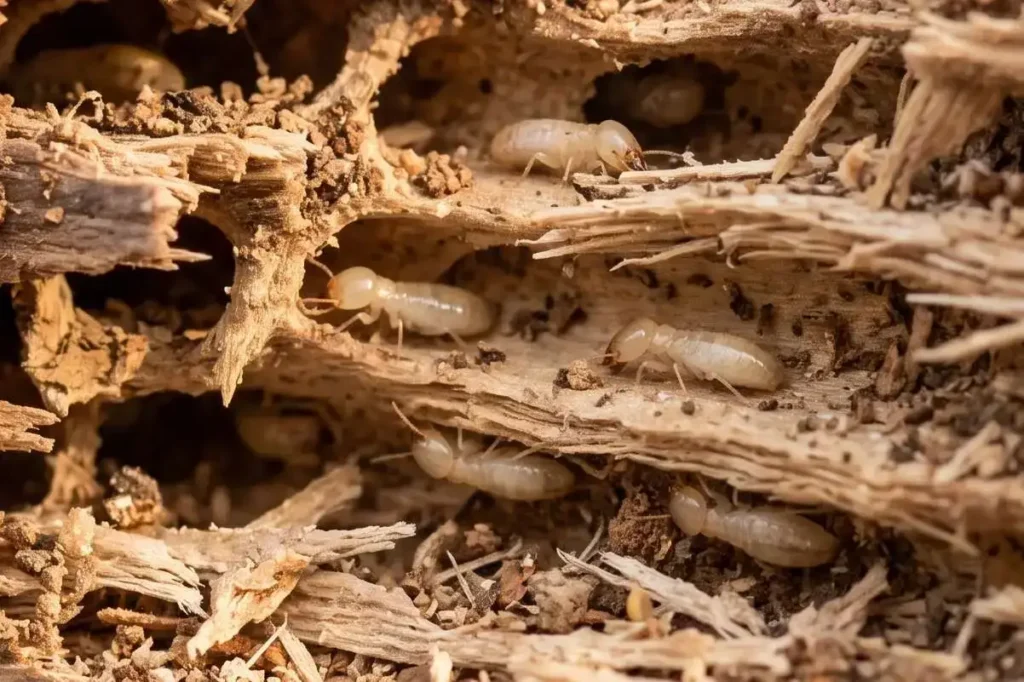
- Mud tubes. Termites build earth-colored tubes as protected runways between the soil and the wood they eat. Look on basement walls, wooden posts, sill plates, and door and window trim. Break a short section open and you may see creamy-white worker termites inside.
- Discarded wings. Winged termites break off their wings soon after they swarm. Small piles of identical, translucent wings near doors and windows are often the only visible evidence of termites inside a building.
- Termite swarmers. These dark brown to black winged termites, about 3/8 to 1/2 inch long, have two pairs of equal-length wings. They emerge in spring and fly toward light. A swarm indoors means a well-established colony is close by.
- Hollow-sounding wood. Tap baseboards, sills, and exposed joists with a screwdriver handle. Wood that sounds hollow, or gives way when pressed, has been eaten from the inside.
- Frass. Frass is termite droppings. Six-sided pellets piled below tiny kick-out holes in wood are the mark of drywood termites. Subterranean termites keep soil and waste inside their tunnels, so coarse, stringy shavings are more likely carpenter ant debris.
Swarmers or shed wings inside the house are a sure sign termites are already working in the building. Book an inspection when you see either one instead of waiting for damage to surface, and note where you found it so the technician can start there.
What Does Termite Damage Look Like?
Termite damage looks like wood hollowed out by tunnels, with the passages coated in a dried, earth-like material. Long-infested timber can look rotten. Worker termites never come out into the open, so a beam often looks solid on the surface until someone probes it and it breaks apart. Probing infested wood with a screwdriver often spills out live worker termites.
Damage usually concentrates in the basement or crawlspace and in the timber directly above the foundation: mudsills, joists, studs, and subflooring. Wood-to-soil contact points are especially exposed, including porch steps, deck posts, and door frames set into earth. Termites also favor the warm areas around furnaces, chimneys, and water heaters during winter. Posts and stair supports set into a concrete basement floor carry the same risk. Beyond structural wood, termites eat paper, cardboard, and stored books.
Termite damage builds over years rather than days, which is why it goes unnoticed for so long. Left untreated, it weakens sills and joists until structural problems appear, such as a sagging floor or a broken door frame.
Termites vs. Carpenter Ants and Flying Ants
Winged termites and flying ants look alike at a glance. Three features tell them apart:
- Waist. Ants have a narrow, pinched waist. Termites have a broad waist and a thick body.
- Wings. Termite wings are equal in length and nearly twice as long as the body. Ant front wings are longer than the hind wings.
- Antennae. Ant antennae bend at an elbow. Termite antennae are straight and look like a string of beads.
Carpenter ants damage wood too, but they don’t eat it. They hollow out moist, softened wood to nest, push the coarse shavings outside, and leave smooth tunnels with no soil in them.
Subterranean vs. Drywood Termites: Why It Matters for Inspection
Subterranean and drywood termites nest in different places, so each type leaves different evidence for an inspector to find.
Subterranean termites live in colonies in the soil and need a steady source of moisture. They reach a house through the ground or through mud tubes. An inspection for subterranean termites starts at the foundation, the crawlspace, and every point where wood touches soil. Subterranean termites are one of the most common termite types in the Hudson Valley region.
Drywood termites nest inside the wood itself and need no soil contact. Their giveaway is the small, six-sided pellets they push out through tiny holes. Drywood termites live mainly in the southern tier of the country, from North Carolina through the Gulf Coast to Arizona and coastal California. A Hudson Valley inspection therefore centers on subterranean activity at ground level. The species also shapes the treatment, which is why CrittereX identifies the termite type before planning anything.
What Happens During a Professional Termite Inspection
A professional termite inspection is the first step of CrittereX’s 4-step process, Inspect & Identify. A licensed technician works through the property inside and out, looking for live termites, mud tubes, damaged wood, and the conditions that let a colony reach the structure. The inspection covers four areas:
- Foundation. Interior and exterior foundation walls, checked for mud tubes and for cracks that give termites a hidden way in.
- Crawlspace and basement. Sills, joists, and subflooring, plus leaks, damp soil, and other moisture-prone spots that keep a colony supplied with water.
- Wood framing. Studs, posts, and trim, checked for hollow or damaged wood that can look intact from the outside.
- Exterior wood-to-soil contact. Porch steps, deck posts, siding, and door frames that touch the ground or sit below grade.
The technician also identifies the termite species. Those findings feed directly into step 2, Build a Targeted Plan, which accounts for your foundation type, moisture levels, and wood-to-soil contact. Some activity stays hidden inside finished walls, which is one reason CrittereX schedules follow-up inspections after treatment.
For termite inspection cost and treatment pricing on your property, use the Get A Free Quote button. Before the visit, clear a path to the basement or crawlspace access and tell the technician where you saw mud tubes, wings, or damaged wood.
Termite Treatment and Prevention After an Inspection
When an inspection finds termites, CrittereX moves to step 3, Treat with Purpose. The approach depends on the termite species and how far the colony has spread. Treatment uses safe, regulated practices and targets the colony at its source, not only the termites visible on the surface. Step 4, Prevent & Follow Up, seals wood-to-soil contact points, deals with moisture sources, and sets follow-up inspections to catch new activity before it turns into structural damage. See how our termite control services in the Hudson Valley work.
Do-it-yourself termite treatment can give temporary relief, but store-bought products rarely reach the colony in the soil. Prevention habits help year-round, and especially before spring termite season:
- Store firewood, lumber, and wood debris away from the foundation.
- Replace wood that touches soil, such as posts and steps, with pressure-treated or non-wood materials.
- Point gutters and downspouts so water drains away from the house.
- Fix leaking pipes and faucets, and keep crawlspaces ventilated.
- Seal cracks and gaps in the foundation.
- Keep at least 3 inches of clearance between wood siding and soil, and trim shrubs back from foundation vents.
Frequently Asked Questions About Termite Inspections
The answers below cover five common questions homeowners ask about getting rid of termites, spotting swarmers, recognizing damage, what treatment costs, and how to prevent termites.
How Do You Get Rid of Termites?
Professional treatment is the reliable way to get rid of termites. Store-bought sprays reach only the termites you can see, while the colony keeps feeding from the soil. CrittereX treats the colony at its source, then schedules follow-up inspections to catch any new activity.
Do Termites Fly?
Yes. Reproductive termites, called swarmers, fly briefly in spring to pair off and start new colonies, then shed their wings. Swarmers inside a house signal an established colony nearby, and the wings they leave on windowsills are often the first clue homeowners find.
What Does Termite Damage Look Like?
Termite damage shows up as grooved or hollowed wood lined with dried soil and floors that sag over weakened joists. Paint over damaged wood can also look sunken, bubbled, or blistered, though moisture can cause that too.
How Much Does Termite Treatment Cost?
Termite treatment cost depends on the size of the property, how far the infestation has spread, and the treatment method it needs. Those factors only become clear on site, so CrittereX confirms pricing after an inspection. Request a quote with the Get A Free Quote button.
How Do You Prevent Termites?
Prevent termites by removing wood-to-soil contact, keeping soil around the foundation dry, storing firewood away from the house, and sealing foundation cracks. A routine termite inspection, usually once a year, catches new activity early, before it spreads into the framing.
Schedule a Termite Inspection in the Hudson Valley
Mud tubes, shed wings, or soft wood mean it is time for a professional look. Book an inspection through our termite control services in the Hudson Valley, or call (845) 247-7564 to talk with the CrittereX team.